

Warm leads are prospects who have shown credible interest or recognizable buying intent, but are not ready to buy on the spot. In B2B sales, warm leads usually sit between cold outreach and fully sales-qualified opportunities. They have engaged in a way that gives your team a reason to reach out with context, whether that came from email replies, LinkedIn engagement, website activity, referrals, webinar attendance, or a prior conversation.
Warm leads matter because they change how your team should sell. If your reps treat every prospect like a cold lead, they waste time on generic outreach and miss good timing. If they treat every engaged contact like a hot lead, they push too early and lose momentum. The real job is knowing when interest becomes worth a call, an email follow-up, or a meeting ask.
For outbound teams, warm leads are best defined by observable signals. That matters because most advice online keeps the term vague. In practice, a lead becomes warm when there is enough engagement, relevance, and timing to justify direct outreach by an SDR or AE. That is where a phone-focused outbound motion can turn attention into qualified meetings booked onto the calendar.
This guide gives you an operational definition. We will cover what warm leads are, how they differ from cold and hot leads, where they sit in the funnel, which signals count, and how to move more prospects into that middle band so your team can improve pipeline coverage.
What Is a Warm Lead?
A warm lead is a prospect with meaningful evidence of interest. That evidence can come from direct action, known fit, or prior familiarity with your company. The key point is that your team has a reason to believe the prospect may be open to a conversation now, not just someday.
In B2B outbound, warmth is not a feeling. It should be tied to signals your team can see and act on. A prospect who visited your pricing page twice, replied to an email, accepted a LinkedIn connection and engaged with content, or was referred internally is warmer than a name on a list with no recent activity.
Warm does not mean sales-ready. A warm lead may still need education, qualification, or internal alignment before becoming an opportunity. That is why the handoff between marketing activity, outbound prospecting, and sales follow-up matters.
- They match your ideal customer profile or target account criteria.
- They have shown some level of recent engagement or intent.
- They are more likely to respond to relevant outreach than a true cold prospect.
- They still require qualification before they become a sales-qualified lead.
Warm Leads vs Cold Leads vs Hot Leads
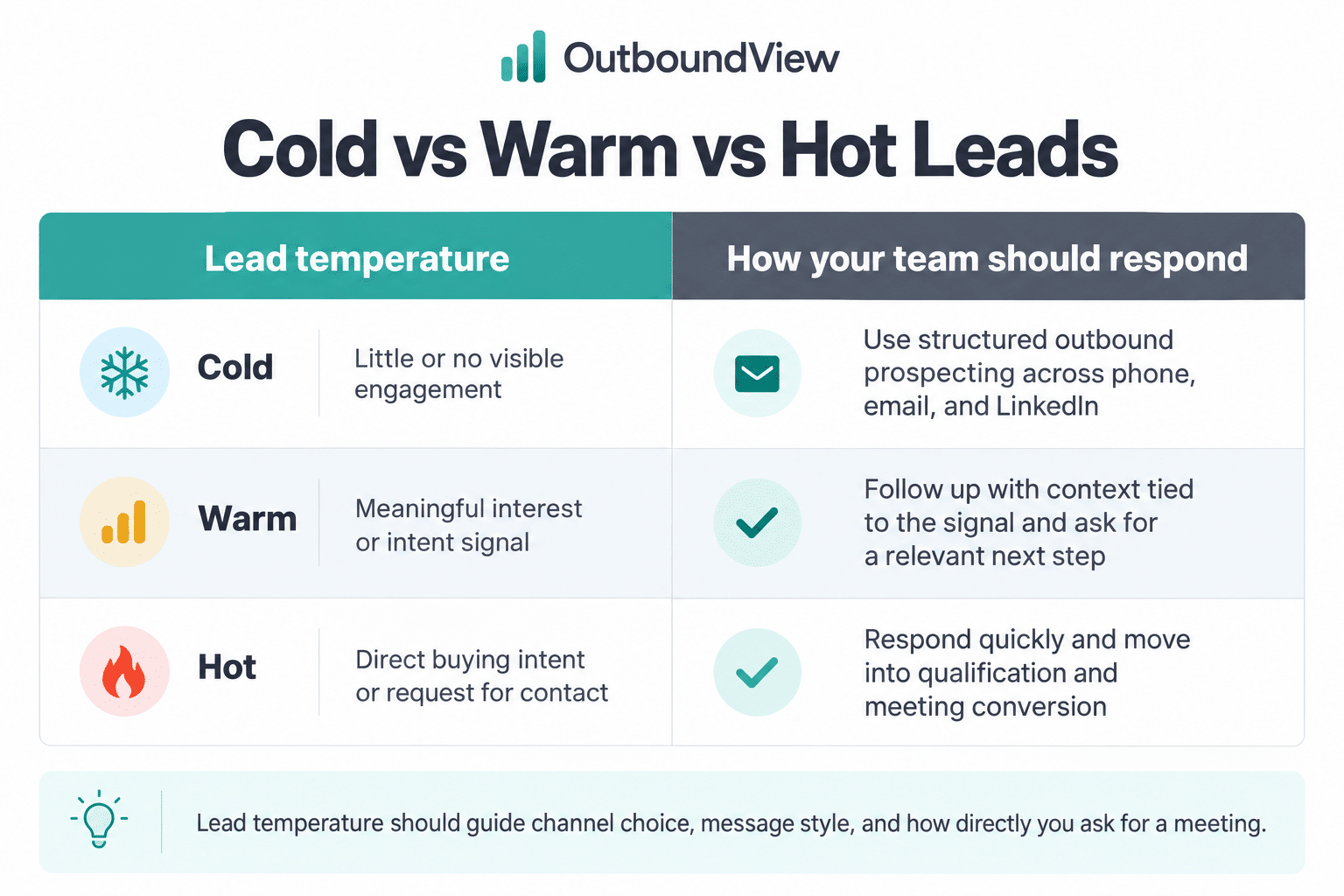
Lead temperature helps teams choose the right motion. The point is not to label contacts for the sake of labeling them. The point is to decide how direct your message should be, which channel to use first, and whether you should ask for a meeting now or build more engagement first.
Cold leads have little or no visible intent. They may fit your ICP, but they have not interacted with your company in any meaningful way. They usually require stronger positioning, clearer relevance, and more touches across channels.
Warm leads have context behind the outreach. They may know your brand, have interacted with content, responded lightly, or shown behavior that suggests active interest. They are the best candidates for thoughtful, fast follow-up.
Hot leads are close to a buying conversation. They have taken a stronger action, such as requesting contact, asking for pricing, or confirming a business need and timing. These leads usually deserve immediate human follow-up.
Sales-qualified leads sit beyond temperature alone. A lead can be warm or hot and still not be qualified. Qualification means the account, need, timing, and next step make sense for a real sales process.
| Cold lead | ICP fit but little or no engagement | Structured outbound prospecting across phone, email, and LinkedIn |
| Warm lead | Recent engagement, referral, prior conversation, or repeat website activity | Context-driven outreach that references the signal and asks for a relevant next step |
| Hot lead | Direct inquiry, strong intent action, or clear buying conversation | Immediate follow-up focused on qualification and meeting conversion |
| Sales-qualified lead | Confirmed fit, need, and next-step viability | AE-led sales process with clear ownership and follow-up |
What Makes a Lead Warm?
Warmth comes from a mix of fit, engagement, and timing. One isolated action does not always make a lead warm. A single email open is weak. A reply, a referral, a return website visit from a target account, or repeat engagement from the right persona is much more useful.
Fit matters as much as activity. If someone engages but sits outside your ICP, your team may not want to prioritize them. A warm lead should have both some level of interest and a plausible business case for outreach.
Recency matters because intent fades. Teams should act quickly when a meaningful signal appears. A delayed follow-up often turns a warm lead back into a cold one.
- Known ICP match or target account relevance
- Recent response to outbound email or LinkedIn outreach
- Multiple website visits, especially to solution, pricing, or contact pages
- Webinar registration or attendance
- Form fill that suggests research or active evaluation
- Referral from a customer, partner, investor, or colleague
- Prior conversation that ended without a firm no
- Engagement from more than one stakeholder inside the same account
Where Warm Leads Sit in the Sales Funnel
Warm leads usually sit in the middle of the funnel. They are past pure awareness but not yet fully qualified opportunities. They know enough to recognize a problem or a category, and they have shown interest that justifies tailored outreach.
This middle stage is where many teams lose momentum. Marketing may see engagement but not know when to hand off. Sales may see activity but not know whether it is meaningful. SDR teams often solve that gap by turning partial interest into a live conversation.
For pipeline coverage, this stage deserves process discipline. If your team defines warm leads clearly, you can route them faster, prioritize outreach better, and create cleaner reporting between top-of-funnel activity and meetings booked onto the calendar.
- Cold prospecting creates first awareness and initial engagement.
- Warm lead follow-up tests interest and qualifies the conversation.
- Qualified meetings move into the sales process for deeper discovery and closing.
How to Identify Warm Leads in an Outbound Motion
Outbound teams need a practical signal framework. The best warm lead definitions are not built around theory. They are built around what your SDRs can see, verify, and act on across channels.
Start with direct signals. Replies, referrals, booked-but-rescheduled meetings, return website visits from named accounts, webinar attendance, and prior conversations all create a strong reason to follow up.
Then layer in pattern signals. A single action may not tell you much, but a cluster of actions often does. If the same prospect opens email, views your LinkedIn profile, and revisits your site, that combination is more useful than any one event by itself.
Finally, tie every signal back to outreach strategy. The signal should shape the message. If the lead came from content engagement, reference the problem or topic. If it came from a referral, lead with credibility and context. If it came from a prior conversation, acknowledge where things left off and why you are reaching back out.
- Email: replies, forwards, repeat opens paired with other engagement, link clicks to commercial pages
- LinkedIn: connection acceptance, post engagement, profile views, direct messages
- Website: repeat visits, return visits from target accounts, high-intent page views, contact-page traffic
- Events: webinar signups, attendance, event follow-up conversations
- Human signals: referrals, previous calls, inbound mentions, internal introductions
How to Score Warm Leads Without Overcomplicating It
You do not need a complex scoring model to act well. Many teams stall because they try to design the perfect lead score before they define simple operating rules. A workable system is better than a sophisticated one nobody trusts.
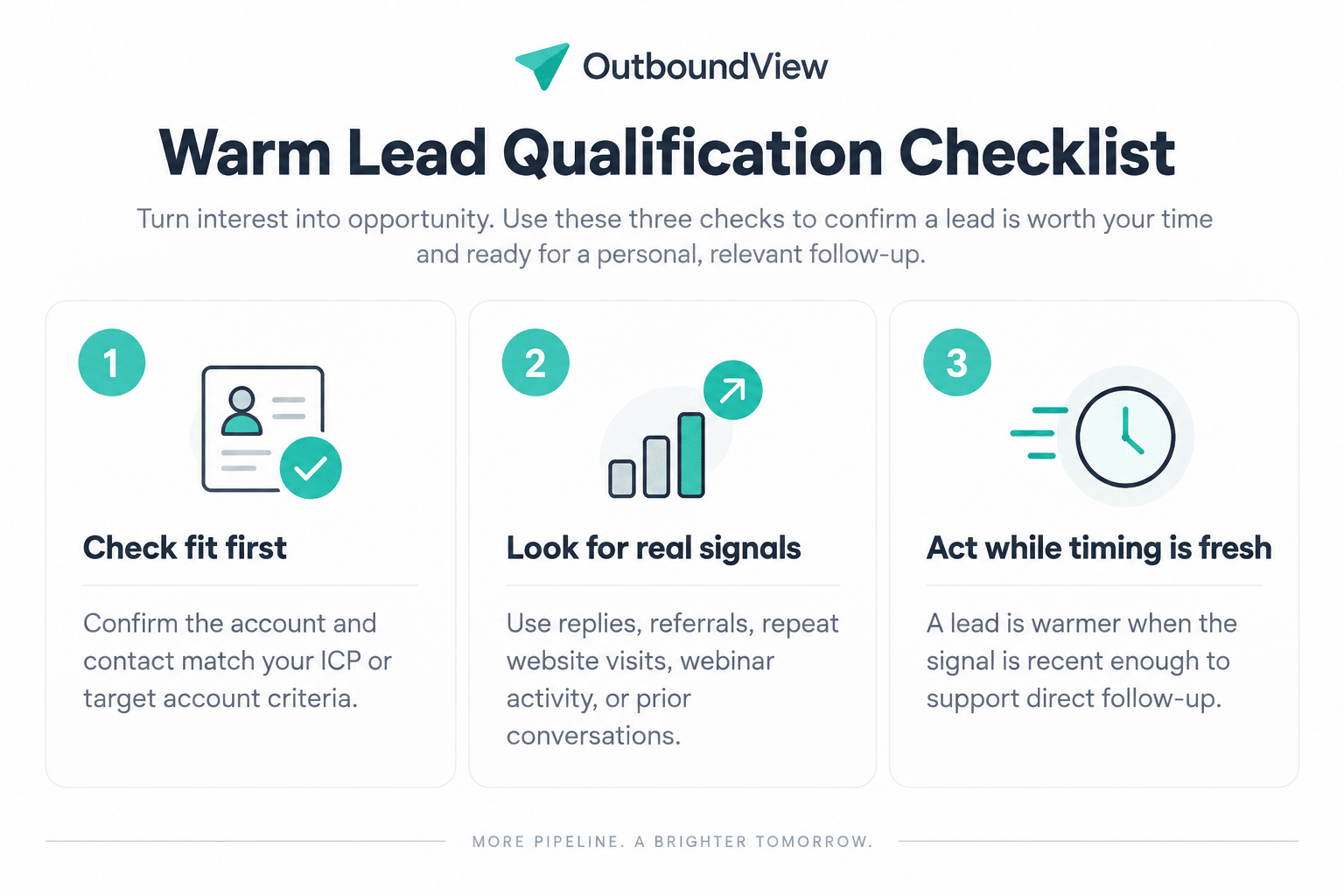
Use three filters. First, confirm account fit. Second, confirm recent engagement or intent. Third, decide whether the signal is strong enough for direct outreach and a meeting ask. If all three are present, the lead is warm enough to prioritize.
Keep ownership clear. If marketing, SDRs, and AEs all use different definitions, handoffs break. Agree on what counts as warm, what deserves same-day follow-up, and when a warm lead becomes a sales-qualified lead.
- Fit: Is this the right company and persona?
- Signal strength: Was the action meaningful or weak?
- Recency: Did the signal happen recently enough to matter now?
- Context: Do we know why this person may be interested?
- Actionability: Can an SDR follow up with a specific message and next step?
How to Turn Cold Leads Into Warm Leads
Most pipeline does not start warm. Teams create warm leads by combining the right list, the right message, and consistent multichannel follow-up. That is why build-vs-buy matters. If your internal team is stretched, prospecting often slips and the top of funnel becomes unpredictable.
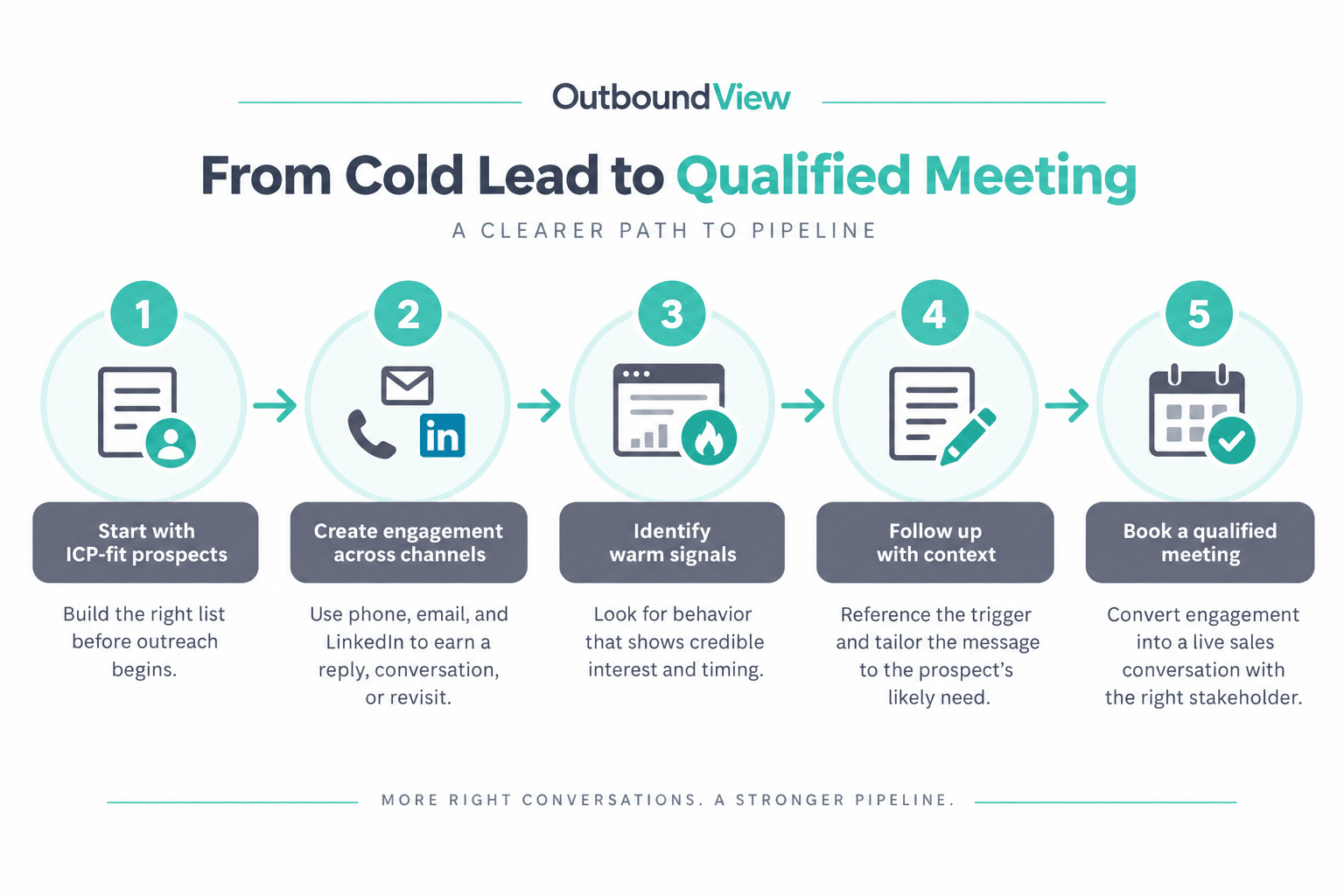
The goal is to earn a signal worth acting on. That may be a reply, a referral, a content interaction, a website revisit, or a call connection that opens the door to a second touch. Warmth is often created through relevance and repetition.
Phone still matters here. Email and LinkedIn can create visibility, but phone-focused outreach often accelerates the move from passive awareness to active conversation. A good call can validate need, timing, and role much faster than waiting on digital engagement alone.
- Build accurate ICP-based target lists before launching outreach.
- Lead with a problem your buyer already recognizes.
- Use email, LinkedIn, and calls together instead of relying on one channel.
- Follow up quickly when any meaningful engagement appears.
- Reference prior touches so the conversation feels connected.
- Ask for a low-friction next step, not a premature hard sell.
What Good Warm Lead Follow-Up Looks Like
Good follow-up is specific. It should show why you are reaching out now, what signal you are responding to, and what next step makes sense. Generic outreach wastes the value of the lead being warm in the first place.
Good follow-up is channel-aware. A referral may warrant a call first. A webinar attendee may respond better to an email that ties back to the topic. A prospect who engaged on LinkedIn may need a message that feels conversational before a meeting ask.
Good follow-up aims for a qualified meeting, not just a reply. The SDR’s job is to convert interest into a real sales conversation with the right account and stakeholder. That is where dedicated US-based SDRs can make the difference between light engagement and actual meetings booked onto the calendar.
- Reference the actual trigger event or behavior.
- Connect the outreach to a business problem, not just your offer.
- Use a clear call to action that fits the lead’s level of intent.
- Move quickly enough to match the timing of the signal.
- Document the signal source so reporting stays clean.
Warm leads are only valuable if your team knows what to do next
Warm leads sit in the most important part of the funnel for many B2B teams. They are engaged enough to justify real outreach, but not so far along that the meeting books itself. That is why clear definitions, fast follow-up, and channel-specific messaging matter.
If your team needs better pipeline coverage, start by tightening your definition. Agree on what counts as warm, route those leads quickly, and use phone, email, and LinkedIn in a coordinated way. Done well, warm leads become a steady source of qualified meetings instead of scattered activity that never turns into pipeline.
If you want help turning engaged prospects into qualified meetings, see how OutboundView supports phone-focused outbound prospecting with dedicated US-based SDRs: /scale/