

The best lead generation examples are not random tactics. They are structured campaigns built around a clear audience, a specific trigger, a relevant offer, and a measurable next step. If you need more pipeline, the useful question is not "what channels exist?" but "what kind of campaign can my team actually run, and what makes it work?"
You need examples you can actually use. Most lists of lead generation ideas stop at naming channels. That does not help a sales leader who needs more qualified meetings, better pipeline coverage, and a clearer view of what to test next.
This guide is built differently. These lead generation examples are organized by motion: inbound, outbound, paid, partnerships, events, and lifecycle. For each one, you will see the goal, audience, trigger, channel, offer, CTA, why it worked, and how to adapt it.
The focus is B2B practicality. Some examples fit marketing-led teams. Others fit sales-led growth, especially when you need meetings booked onto the calendar faster through phone-focused outbound, email, and LinkedIn. Use them as a library, not a checklist.
What counts as a lead generation example?
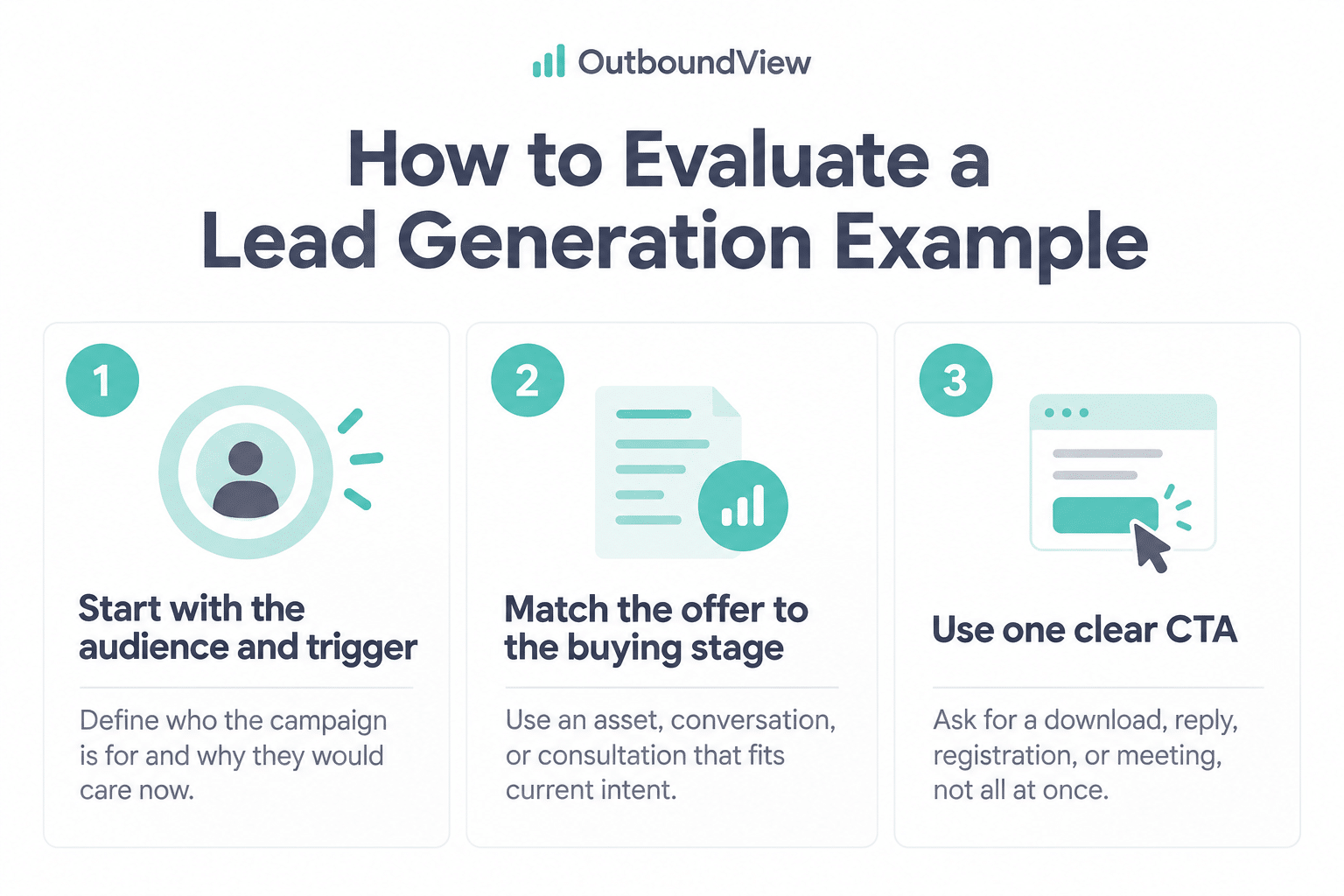
A real example has campaign anatomy. It should show who the campaign was for, what problem or trigger it addressed, what offer was presented, which channel carried the message, what CTA moved the prospect forward, and how success was judged.
That matters because channel alone tells you very little. A webinar is not a strategy by itself. A cold outreach sequence is not a strategy by itself. Results usually come from how tightly the audience, trigger, message, and next step fit together.
For B2B teams, quality matters more than volume. A useful lead generation example should make it easier to create qualified conversations, not just inflate response counts. That is especially true when your sales team is already stretched and needs opportunities worth pursuing.
- Audience: Who the campaign is trying to reach
- Trigger: Why the buyer would care now
- Offer: The value exchange that earns attention
- Channel: Where the campaign runs
- CTA: The next step, such as a download, reply, demo, or meeting
- Success metric: The practical signal that the campaign is working
How to read these lead generation examples
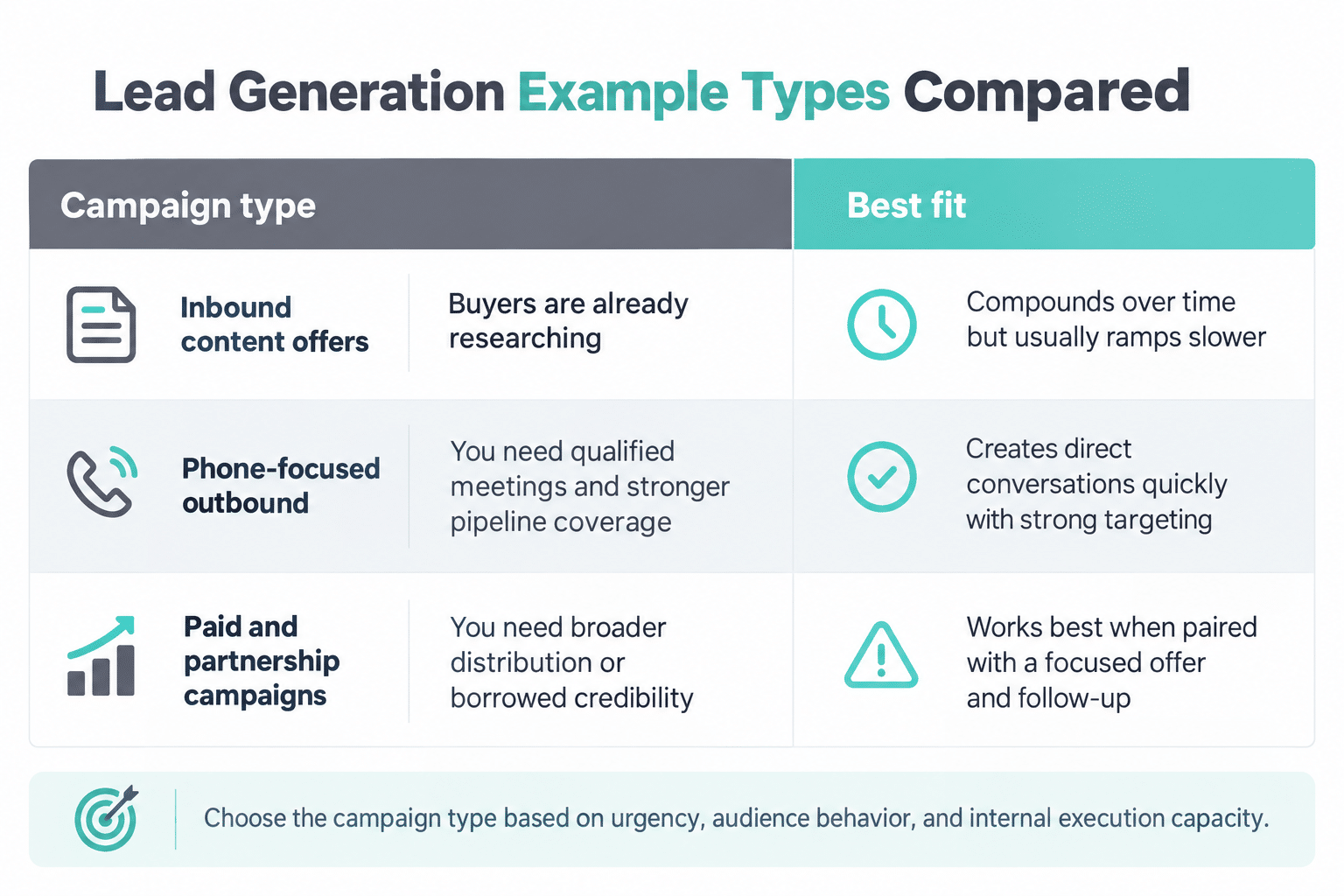
Do not copy them word for word. The point is to understand the structure behind each campaign and adapt it to your own ICP, sales cycle, and resources.
Start with your growth constraint. If the problem is speed, outbound and paid programs often create pipeline sooner. If the problem is cost efficiency over time, inbound and lifecycle programs may matter more. If the problem is conversion quality, tighten the offer and CTA before adding channels.
Match the campaign to your operating model. Founder-led sales teams usually need leaner plays with fewer moving parts. Larger teams can support more segmented programs, custom target lists, dedicated SDR follow-up, and transparent reporting.
- Use inbound examples when buyers already feel the problem and will raise their hand
- Use outbound examples when you need to create demand with the right accounts
- Use paid examples when you need controlled distribution
- Use partnerships and events when trust and access are the bottleneck
- Use lifecycle examples when you already have dormant interest to reactivate
Inbound lead generation examples
Inbound works when the buyer is already searching, comparing, or learning. These campaigns usually trade useful insight for contact information or direct engagement.
- Example 1: Problem-solution guide. Goal: capture demand from buyers researching a painful issue. Audience: operators or sales leaders with an active problem. Trigger: a visible gap in pipeline, conversion, or outbound output. Channel: SEO blog or resource hub. Offer: a detailed guide with practical next steps. CTA: book a working session or request help. Why it worked: it met the buyer at the moment of problem recognition and framed a next step naturally.
- Example 2: Template or worksheet download. Goal: turn educational traffic into known leads. Audience: teams trying to operationalize a process. Trigger: the buyer wants a shortcut or framework. Channel: landing page promoted through content. Offer: an ICP worksheet, call planning template, or outreach planning tool. CTA: download now, then opt into a follow-up sequence. Why it worked: the asset gave immediate utility and identified buyers who were actively doing the work.
- Example 3: Webinar tied to a pressing operating issue. Goal: generate engaged leads and follow-up opportunities. Audience: leaders facing the same near-term challenge. Trigger: planning season, hiring constraints, or a new growth target. Channel: email, LinkedIn, and partner promotion. Offer: a live session with examples and Q&A. CTA: register, attend, then accept a post-event consultation. Why it worked: the format created urgency and let the team qualify intent based on attendance and questions.
- Example 4: Interactive assessment. Goal: move visitors from passive reading to self-diagnosis. Audience: buyers unsure whether the problem is serious enough to act on. Trigger: uncertainty about current performance. Channel: website or campaign landing page. Offer: a short diagnostic that surfaces gaps. CTA: see results and discuss recommendations. Why it worked: it turned abstract pain into a specific conversation starter.
- Example 5: Case-study page built around one use case. Goal: convert mid-funnel prospects who want proof. Audience: buyers evaluating whether a model can work in their context. Trigger: internal skepticism or build-vs-buy debate. Channel: SEO, outbound follow-up, and sales enablement. Offer: a narrow case example with the operational setup explained. CTA: talk through fit. Why it worked: it reduced uncertainty and gave stakeholders language to justify action.
Outbound lead generation examples
Outbound works when you cannot wait for buyers to come to you. The strongest B2B outbound lead generation examples are signal-based, tightly targeted, and persistent without becoming noisy.
This is where campaign structure matters most. Generic cold outreach underperforms because it lacks a reason for contact, a clear audience, and a simple next step.
- Example 6: Signal-based cold outreach. Goal: book qualified meetings with accounts showing a relevant change or trigger. Audience: named accounts that fit the ICP. Trigger: funding, hiring, expansion, leadership change, product launch, or territory shift. Channel: phone-focused outreach supported by email and LinkedIn. Offer: a short conversation tied to the trigger. CTA: schedule a call. Why it worked: timing made the message feel relevant rather than random.
- Example 7: Account-based campaign by segment. Goal: penetrate a defined vertical or account cluster. Audience: companies with shared sales motions or pain points. Trigger: a known operating challenge across the segment. Channel: multichannel prospecting by a dedicated SDR team. Offer: tailored messaging, relevant examples, and a direct meeting ask. CTA: compare current approach or review a targeted plan. Why it worked: segment-level customization was scalable and more credible than broad personalization.
- Example 8: Breakup-and-recycle sequence. Goal: recover value from nonresponsive prospects. Audience: contacts who engaged lightly or fit the ICP but stalled. Trigger: no response after a complete sequence. Channel: email and phone with spaced follow-up. Offer: a cleaner, lower-friction ask or alternate resource. CTA: reply if timing changed, or choose a later conversation. Why it worked: it respected buyer timing while keeping the door open.
- Example 9: Call-first appointment setting. Goal: create conversations faster in markets where inboxes are crowded. Audience: decision-makers who respond better to direct discussion. Trigger: strong ICP fit and a clear business case. Channel: phone-led outreach by US-based SDRs, supported by email. Offer: a concise reason to talk now. CTA: accept a meeting booked onto the calendar. Why it worked: direct conversation surfaced qualification quickly and shortened the path to a real sales interaction.
- Example 10: Outbound around a high-value asset. Goal: lift reply quality by leading with something useful. Audience: buyers who need practical insight before committing to a meeting. Trigger: likely interest in benchmarking, process design, or market perspective. Channel: targeted outreach. Offer: a tailored teardown, mini audit, or strategy memo. CTA: review findings together. Why it worked: the outreach earned attention by offering specific value before the sales call.
Paid and partnership lead generation examples
Paid and partner channels are useful when distribution is the constraint. They can expand reach faster than organic channels, but they work best when paired with focused messaging and disciplined follow-up.
- Example 11: Paid search around high-intent problem terms. Goal: capture demand from buyers already evaluating solutions. Audience: prospects searching with urgency. Trigger: active problem research. Channel: search ads to a focused landing page. Offer: a practical guide, audit, or direct consultation. CTA: request a conversation. Why it worked: the message aligned closely with immediate intent.
- Example 12: LinkedIn sponsored content for a narrow audience. Goal: put a relevant offer in front of a specific role or account set. Audience: a defined job function with a known pain point. Trigger: strategic priority or planning cycle. Channel: paid social. Offer: a webinar, diagnostic, or guide. CTA: register or download. Why it worked: role-level targeting and message control made the campaign easier to tune.
- Example 13: Partner co-marketing campaign. Goal: borrow trust and reach from an adjacent provider. Audience: overlapping buyers who already value the partner’s perspective. Trigger: a shared pain point neither company solves alone. Channel: co-hosted content, webinars, or email swaps. Offer: joint education with practical examples. CTA: attend, download, or request a follow-up discussion. Why it worked: the partner relationship lowered skepticism and increased relevance.
Event and lifecycle lead generation examples
Not every lead source has to be net-new. Some of the cleanest opportunities come from reworking interest you already paid to create.
- Example 14: Event follow-up campaign by attendee behavior. Goal: turn event activity into meetings. Audience: registrants, attendees, booth visitors, or people who asked questions. Trigger: fresh engagement from the event. Channel: phone, email, and LinkedIn follow-up. Offer: a tailored next step based on what they engaged with. CTA: continue the conversation in a booked meeting. Why it worked: the outreach referenced a recent context the buyer actually remembered.
- Example 15: Lead reactivation sequence. Goal: convert old leads, closed-lost accounts, or dormant conversations into fresh pipeline. Audience: contacts with previous interest or fit. Trigger: new offer, changed market conditions, or internal priority shift. Channel: segmented email and SDR follow-up. Offer: updated perspective, new use case, or a simpler conversation ask. CTA: reconnect and reassess fit. Why it worked: reactivation focused on timing and relevance rather than pretending the relationship was new.
Which lead generation examples fit your team best?
The right campaign depends on speed, resources, and sales complexity. If your team needs pipeline now, outbound and event follow-up usually create faster conversation volume. If you already have meaningful website traffic or audience trust, inbound assets and partner programs can compound over time.
You should also think in build-vs-buy terms. A team with strong internal marketing can build educational assets and nurture paths. A sales organization with weak prospecting capacity may get more traction from outsourced appointment setting, dedicated SDR execution, and better target list development.
Pick one motion, then tighten execution. Most teams do not fail because they chose the wrong category. They fail because the audience was too broad, the trigger was weak, the offer was vague, or follow-up stopped too early.
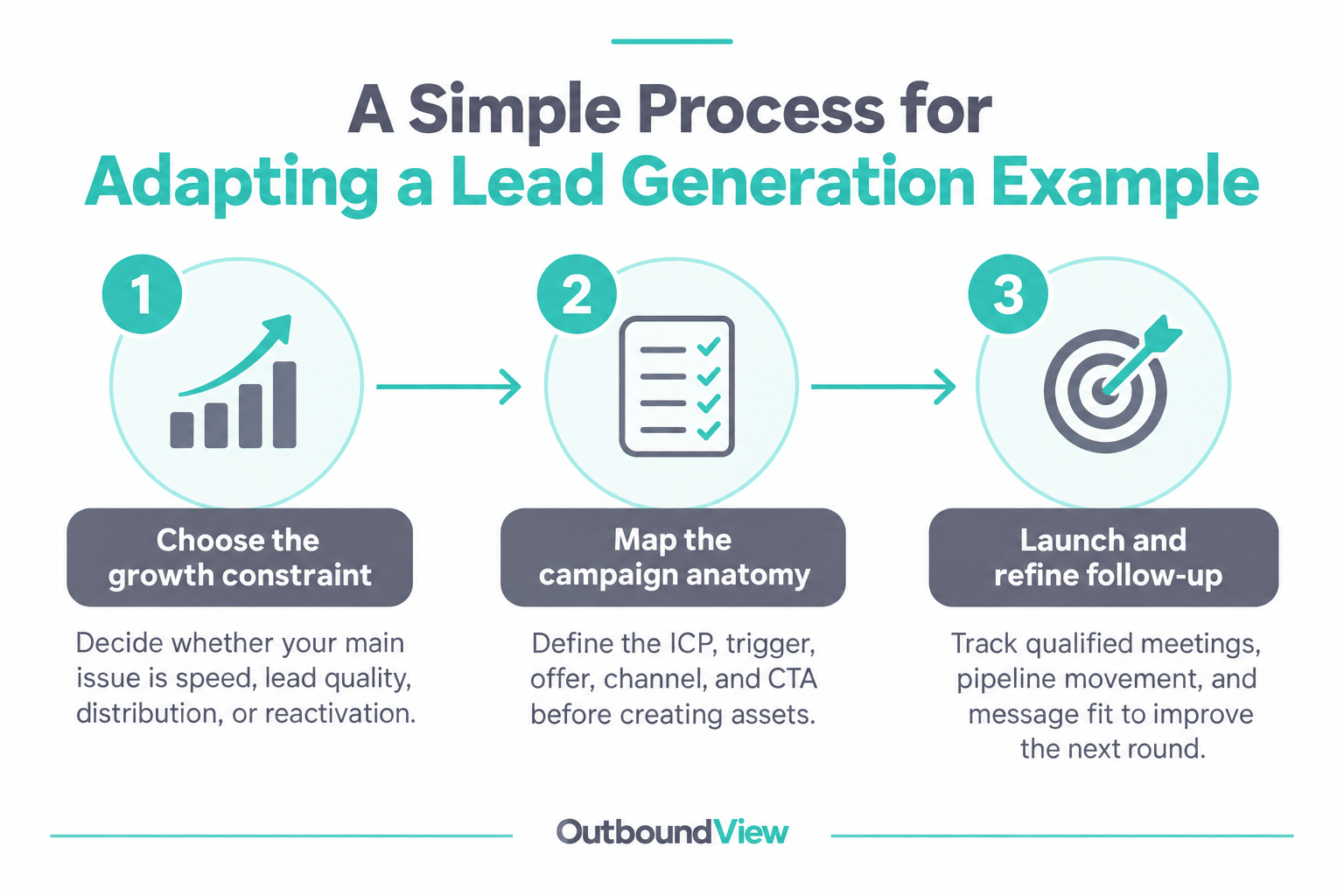
| Campaign type | Best when | Main strength | Watch-out |
|---|---|---|---|
| Inbound content offers | Buyers are already researching | Compounds over time | Usually slower to ramp |
| Phone-focused outbound | Pipeline coverage is the immediate issue | Creates direct conversations quickly | Requires strong ICP and messaging discipline |
| Paid search or paid social | You need controlled distribution | Fast testing and targeting | Can waste spend with weak offer-market fit |
| Partnerships and events | Trust and access are hard to win alone | Warmer context and borrowed credibility | Follow-up quality determines outcomes |
| Lifecycle reactivation | You have dormant leads or old opportunities | Efficient use of existing demand | Needs segmentation and a fresh reason to engage |
What the best lead generation campaigns have in common
They start with a defined ICP. Good campaigns target a market slice that shares the same problem, timing, and buying logic. If the ICP is fuzzy, the campaign usually feels generic.
They use a believable trigger. Buyers respond when there is a reason the conversation matters now. That reason can come from the market, the company, the role, or recent engagement.
They make one clear ask. Strong lead generation campaigns do not overload the prospect with options. They present one next step that fits the stage of interest.
They connect sales and marketing execution. In many B2B teams, demand generation creates interest but follow-up breaks down. The better model is coordinated execution across targeting, outreach, qualification, and reporting.
They measure what matters. The useful view is not only lead count. It is whether the program produces qualified meetings, healthy pipeline progression, and enough transparency to improve the next wave.
Turn lead generation examples into a repeatable pipeline plan
Examples are only useful if they change execution. If your team is trying to close a pipeline gap, start with a campaign type that matches your urgency, your audience, and the resources you actually have.
For many B2B teams, that means combining focused outbound with stronger targeting and cleaner follow-up. When a dedicated team owns prospecting, qualification, and meetings booked onto the calendar, your closers can stay focused on selling instead of chasing top-of-funnel activity.
If you want help choosing the right motion, OutboundView can help you pressure-test the options. We build phone-focused outbound programs with US-based SDRs, custom target lists, and transparent reporting so lead generation turns into qualified meetings and real pipeline.
Schedule a Discovery Call